Case study · Ministry of Education, Colombia
Bringing learning to rural classrooms without internet.
- Role
- UX, information architecture
- Date
- July 2021 – ongoing
- Team
- Camilo Beltrán, development lead Natalia Torres, visual design
- Link
- Aprender Digital
How do you get educational resources to rural teachers when internet access can’t be assumed?
Challenge
Create a product model for rural teachers who can’t rely on internet access as a default.
Contribution
UX, information architecture, value-proposition work and prototyping on a short timeline.
Research
Desk research plus interviews with 10 teachers and 5 ICT leaders serving low-connectivity schools.
Outcome
An offline-ready content package model, a simpler publishing workflow and a clearer value proposition.
In numbers
7M+
rural Colombians without internet access
47%
of rural schools with no network at all
3
months from new proposal to a tested MVP
Background
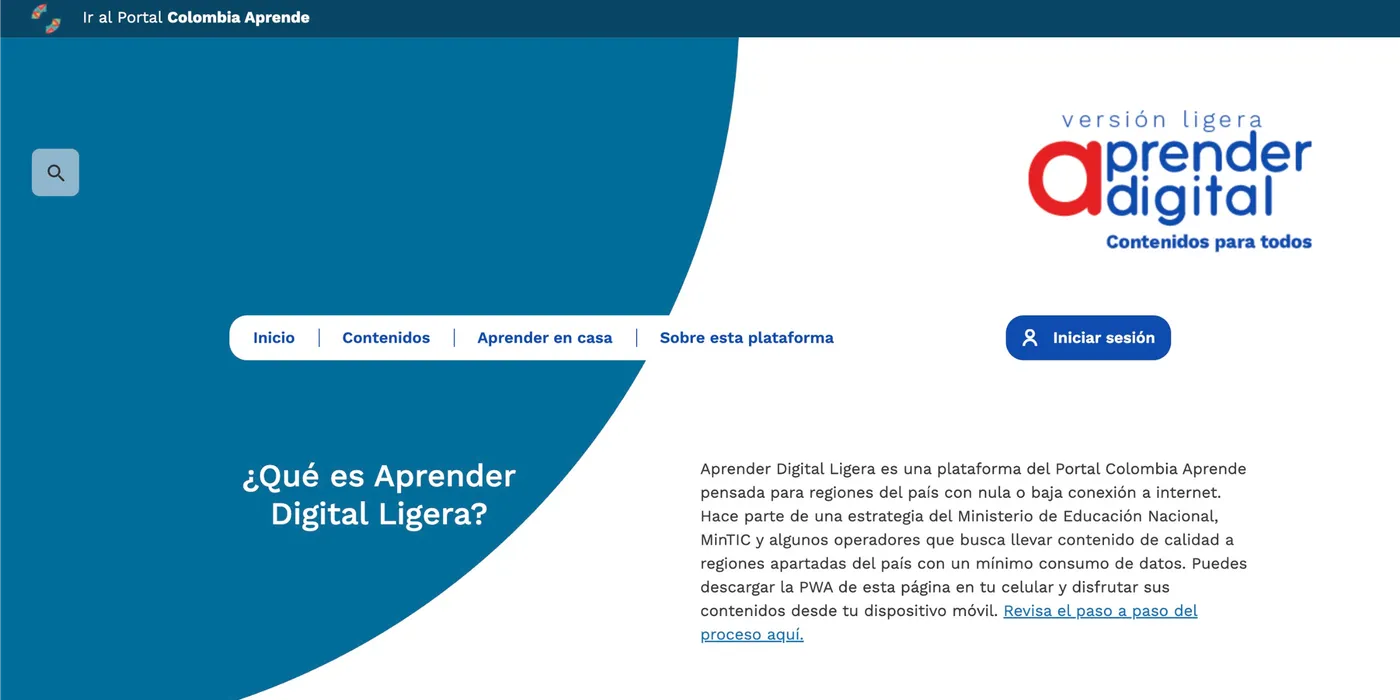
Aprender Digital was a spin-off of Colombia Aprende, created to support the educational community with content and guidelines during the COVID-19 lockdown.
It was a temporary solution while we finished the new colombiaaprende.edu.co. When the new Colombia Aprende launched in October, Aprender Digital became redundant.
It had earned real recognition, though, so the Ministry gave us the chance to rethink it around a new value proposition with a single goal: a solution that works for people without an internet connection.
Process
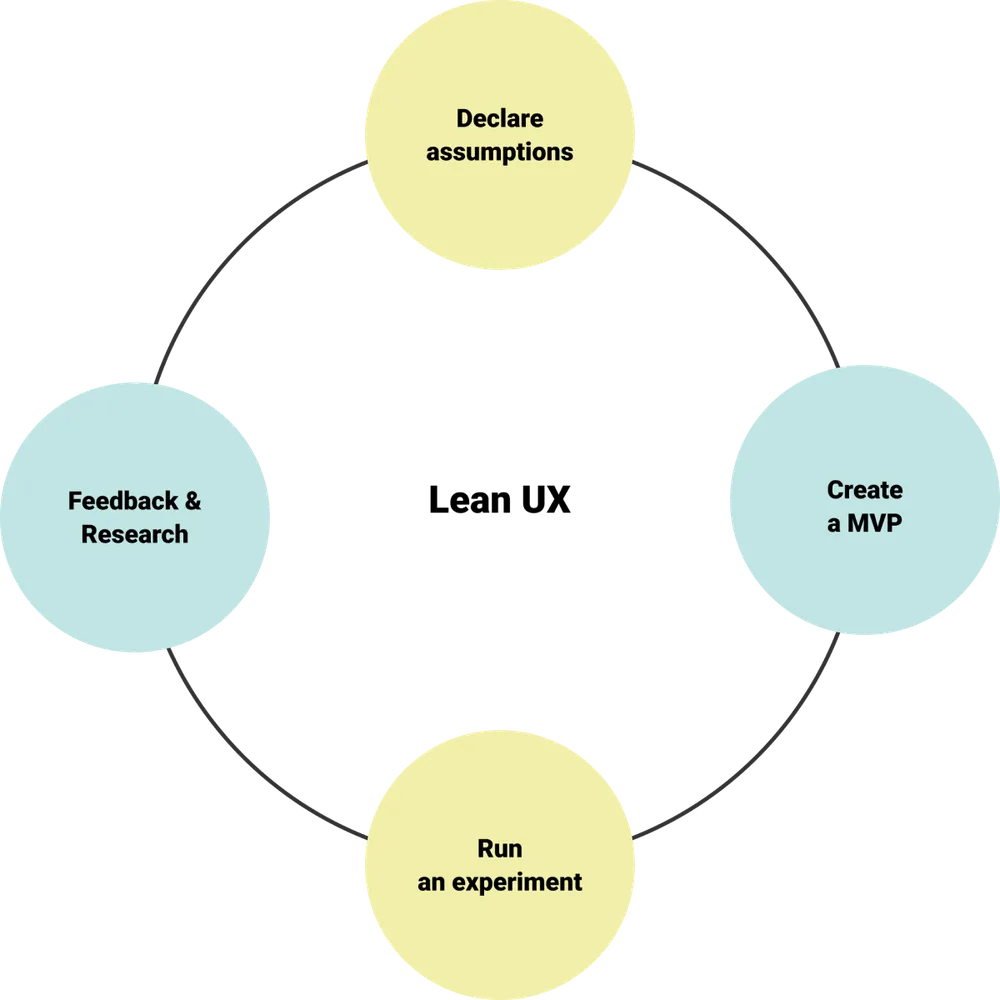
Unlike Colombia Aprende, this ran on a short timeline: three months to propose a new value proposition, define the scope, build an MVP and test it with rural teachers.
We chose Lean UX to create value fast. Instead of defining requirements meticulously, we started from desk research to frame the problem.
More than 7 million rural Colombians lack internet access, and 47% of rural schools have no network infrastructure. A rural child receives about half the education of a peer in Bogotá or Medellín.
Problem statement
The lack of access to educational resources is widening the gap between rich and poor, and hurting the work of rural teachers.
Hypothesis
If we deliver resources and guidelines consistently, even without internet, rural teachers can do better work, and education gets better with it.
Finding the users
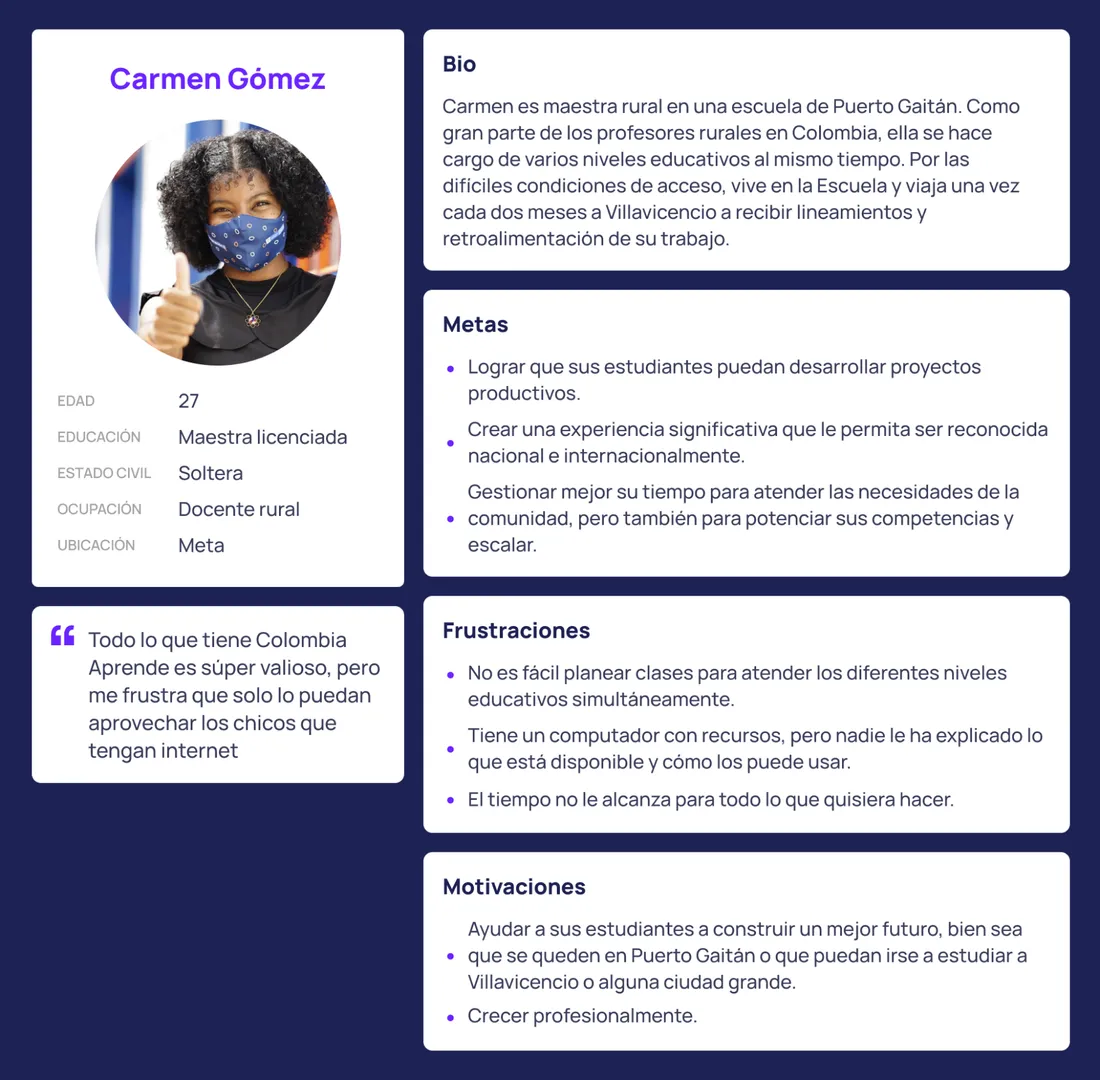
We brought the regional Education Secretariats into the process and built two proto-personas: a rural teacher and an ICT leader within the Secretariat.
Then we interviewed 10 teachers and 5 ICT leaders to turn those proto-personas into evidence-based personas.
Creating value
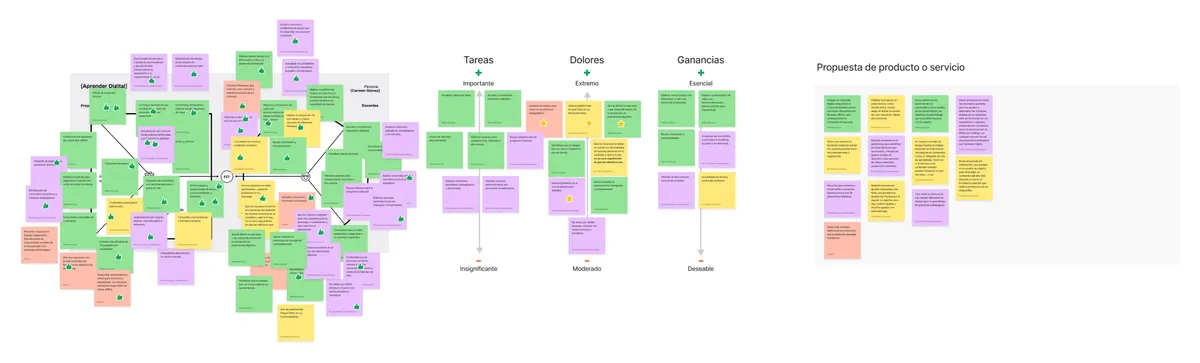
To define the MVP we first set the new value proposition, running the exercise for both personas. The workshop produced the key insight: Secretariats needed content packages within two or three weeks of asking, and teachers needed them as one clear package, not resources downloaded one by one.
A curated content package that teachers carry to class as a single file.
Aprender Digital became a microsite of curated packages. Secretariats and teachers download a package as a self-contained HTML interface and carry that one file to the computers in rural schools. On our side, no one assembles packages by hand: we publish content as always, and the CMS does the rest.
Prototyping and testing
We built two interfaces: one for the website and one for the offline packages. The first iterated on the previous site; the second was built on Material Design guidelines.
Aprender Digital website
Open in FigmaOffline content package
Open in FigmaResults
We shipped the MVP in three months. The site still draws about 1,200 visits a month from a niche audience: the teachers and Secretariats it was built for.
Lessons
Shipping the first version quickly was the right call. But content design lagged behind product and UX, and the gap showed in the first weeks. A short beta would have closed it sooner.
Content strategy has to run in parallel with design from the first sprint, not after it.
This is the short version. The full story covers the research, the personas, the value proposition workshop and both prototypes.